

Introduction
In modern manufacturing, consistency is a critical factor in determining the quality and reliability of industrial components. Even small variations in production can lead to defects, reduced performance, and increased operational risks. This is particularly important in investment casting, where precision and repeatability are essential to producing high-performance parts for demanding environments.
Through structured manufacturing systems and controlled processes, Texmo Blank ensures that each stage of production contributes to consistent and reliable casting quality. By maintaining strict control over materials, temperatures, and process conditions, manufacturers can achieve uniform results across production batches while minimising defects.
Understanding Process Control in Investment Casting
Process control in investment casting refers to the careful monitoring and regulation of every stage of production to ensure that each component meets the required specifications. From the preparation of raw materials to the final inspection of finished parts, every step must be executed with precision.
The process typically begins with the creation of wax patterns, which define the shape and dimensions of the final component. These patterns are then coated with ceramic material to form a mould. Once the wax is removed, molten metal is poured into the mould to produce the casting. At each stage, variables such as material quality, environmental conditions, and handling procedures must be carefully controlled to maintain consistency.
Without effective process control, variations in these factors can lead to defects such as cracks, porosity, or dimensional inaccuracies. By standardising procedures and closely monitoring production conditions, manufacturers can ensure repeatable and high-quality outcomes.
Control in Pattern and Mould Preparation
The foundation of consistent casting quality lies in the accuracy of the wax pattern and the integrity of the ceramic mould. Any imperfections at this stage will be carried through to the final component, making early-stage control essential.
Wax patterns must be produced with precise dimensions and smooth surfaces to ensure that the final casting meets design requirements. Consistency in pattern production is achieved through controlled tooling and careful handling. Similarly, the ceramic shell must be built with uniform thickness and strength to withstand the casting process.
Environmental factors such as temperature and humidity also influence mould formation. Controlled drying conditions and consistent coating processes help maintain the stability of the ceramic shell, reducing the risk of deformation or cracking during metal pouring.
Temperature and Metal Flow Management
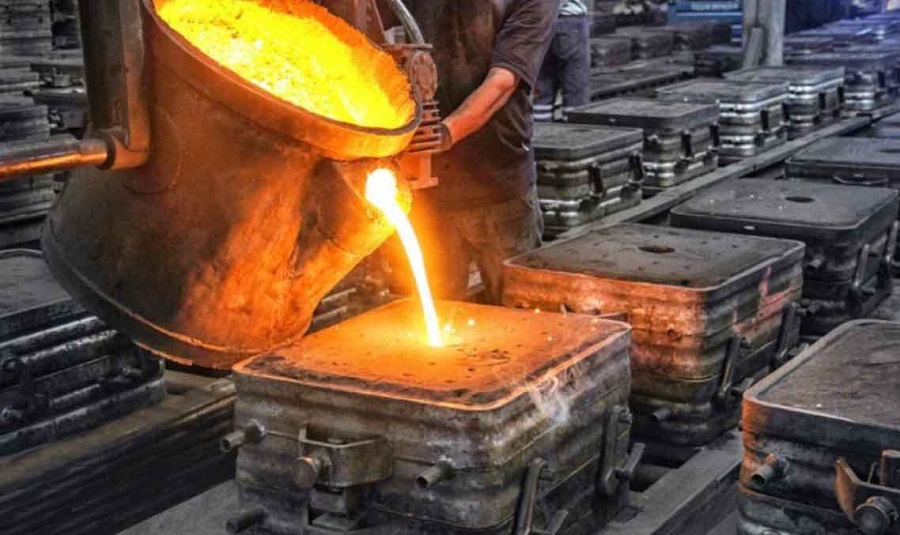
Temperature control is one of the most critical aspects of process control in investment casting. The molten metal must be heated to the correct temperature to ensure proper flow and complete filling of the mould.
If the temperature is too low, the metal may solidify before fully filling the cavity, resulting in incomplete components. On the other hand, excessive temperatures can cause oxidation, structural defects, or excessive shrinkage. Maintaining the right balance is essential for achieving high-quality results.
In addition to metal temperature, mould temperature must also be carefully controlled. Preheating the mould helps maintain metal fluidity and ensures uniform solidification. This level of control contributes to consistent casting structure and improved mechanical properties.
Monitoring Cooling and Solidification
The cooling phase plays a significant role in determining the final characteristics of the casting. Controlled cooling ensures that the metal solidifies evenly, reducing internal stresses and preventing defects such as warping or cracking.
By carefully managing cooling rates, manufacturers can achieve uniform grain structure and improved mechanical strength. Sudden or uneven cooling can lead to structural weaknesses that may affect the component’s long-term performance.
Process control during this stage ensures that each casting maintains consistent dimensional accuracy and structural integrity, which is essential for high-performance applications.
Inspection and Continuous Improvement
Even with strict process control, inspection remains vital to ensuring casting quality. Visual checks and non-destructive testing methods such as X-ray or ultrasonic inspection are used to detect both surface and internal defects.
The data collected during inspections is used to continuously improve production processes. By analysing patterns and identifying areas for improvement, manufacturers can refine their methods and enhance overall efficiency.
This approach not only helps maintain consistent quality but also ensures that the manufacturing process evolves to meet changing industry requirements.
Conclusion
Process control is fundamental to achieving consistent casting quality in investment casting. By carefully managing each stage of production, manufacturers can minimise variability, reduce defects, and ensure that components meet strict performance standards.
Through advanced process control systems and engineering expertise, Texmo Blank supports the production of high-quality cast components that deliver reliability and precision across industrial applications. This commitment to consistency ensures long-term performance and dependable results in even the most demanding environments.
